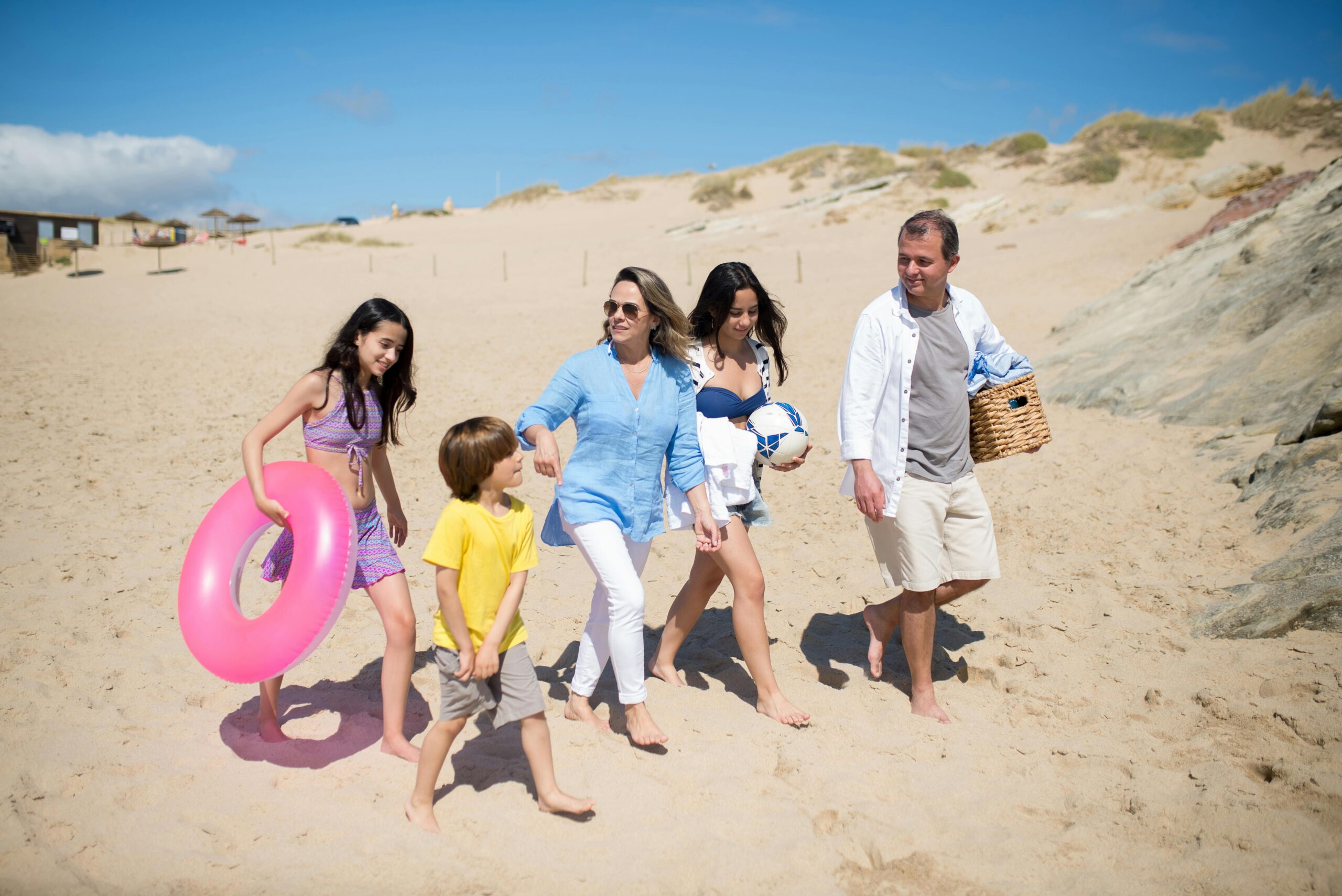
Sunny and warm vacations are very popular. In the summer, I love the sun. Many families love beach vacations, pool parties, lake houses, water parks, and camping trips. In the winter, I love getaways from the cold. When possible, many families love to get away from the cold and snow and travel somewhere warm, often Florida, Arizona, or the Caribbean. Other vacations can also have significant sun exposure: theme park vacations, national park vacations, and camping trips can all have prolonged sun exposure. Sightseeing vacations to Europe in the summer are also popular. The main safety factors with sun vacations are: sun safety, water safety, and safety with crowds. From my personal experiences of traveling with my kids, below are 10 tips for keeping your children safe in sunny vacations:
1. Wear sunscreen. Sunburns hurt. And the effects of solar radiation are cumulative, possibly eventually leading to skin cancer in the future. Wear sunscreen. Make sure your kids wear sunscreen. Reapply. Get in the habit of applying sunscreen first thing in the morning, even if you are not going to the beach or the pool.
2. Limit time in sun. Shade provides much more protection from the sun than sunscreen. Try not to be out in the sun all day every day. Go in the shade for a bit. Especially on winter vacation to warm destinations, it is natural to want to be in the sun as much as possible. And yes, some vitamin D is good, but too much sun exposure can be harmful. Short term consequences of too much sun exposure include sunburn. Long term consequences potentially include skin cancer. Give your skin a break from the sun!
3. Designated toddler watcher. At family gatherings, often it seems like everyone wants to play with the toddlers. However, if everyone is watching them, then usually no one is in charge. Toddlers can wander off, or find something that can hurt them. Always assign one person as a designated toddler watcher – it helps prevent the toddler from getting lost, falling in water, wandering into the street, or otherwise getting hurt.
4. Water safety. Beaches and pools can be a lot of fun, but they can also be dangerous. Keep a close eye on your kids in the water. If the child does not know how to swim, then an adult should be right there with them at all times. For children that do know how to swim, a lifeguard should be present and the adults should also keep an eye on them.
5. Flotation device. For young kids that do not yet know how to swim, consider having them wear a personal flotation device. Even if they are just near the water and you are not planning to have them go in.
6. Teach young kids not to swallow water. Young kids may think that pool water, beach water, or lake water is just like drinking water. It is not. They need to be told not to drink it.
7. Make sure the water is clean and safe. Before swimming at a beach or lake, make sure the water is safe. Not all bodies of water have clean water. Some have dangerous rocks or currents. Some have dangerous animals. Don’t assume that a nice looking body of water is safe, make sure before anyone goes in.
8. Food spoilage. In the heat and in the sun, food spoils faster than at cooler temperatures. At picnics, barbeques, or outdoor buffets, be cautious with food that is left unprotected for long periods of time. The food can spoil and lead to food poisoning.
9. Bug bites. Depending on your location, bug bites could be a big concern or not at all. If there are biting bugs in your vacation destination, pack some bug spray. It helps prevent the discomfort of mosquito bites and the danger of insect borne diseases. If you are traveling out of the country research if there are insect borne diseases where you will be. In some parts of the world, you may need malaria pills, or mosquito netting while sleeping.
10. Have a plan in case you get separated. It’s easy to assume that you won’t get separated from your kids. But it does sometimes happen on vacation. It can happen in a crowded place, like a beach or them park. It can also happen in a remote place, like a national park or a camping trip. Some things that can help. For older children, give them a cell phone. At the beginning of the activity, arrange a meeting location. For any child old enough to memorize it, teach them your phone number. For younger children, instead of arranging a meeting location, tell them that if they get separated, to stay where they are. If they wonder off to somewhere new, this makes finding them more difficult. Have the young child call our your first and last name – this is better than just yelling “mommy” or “daddy.”