

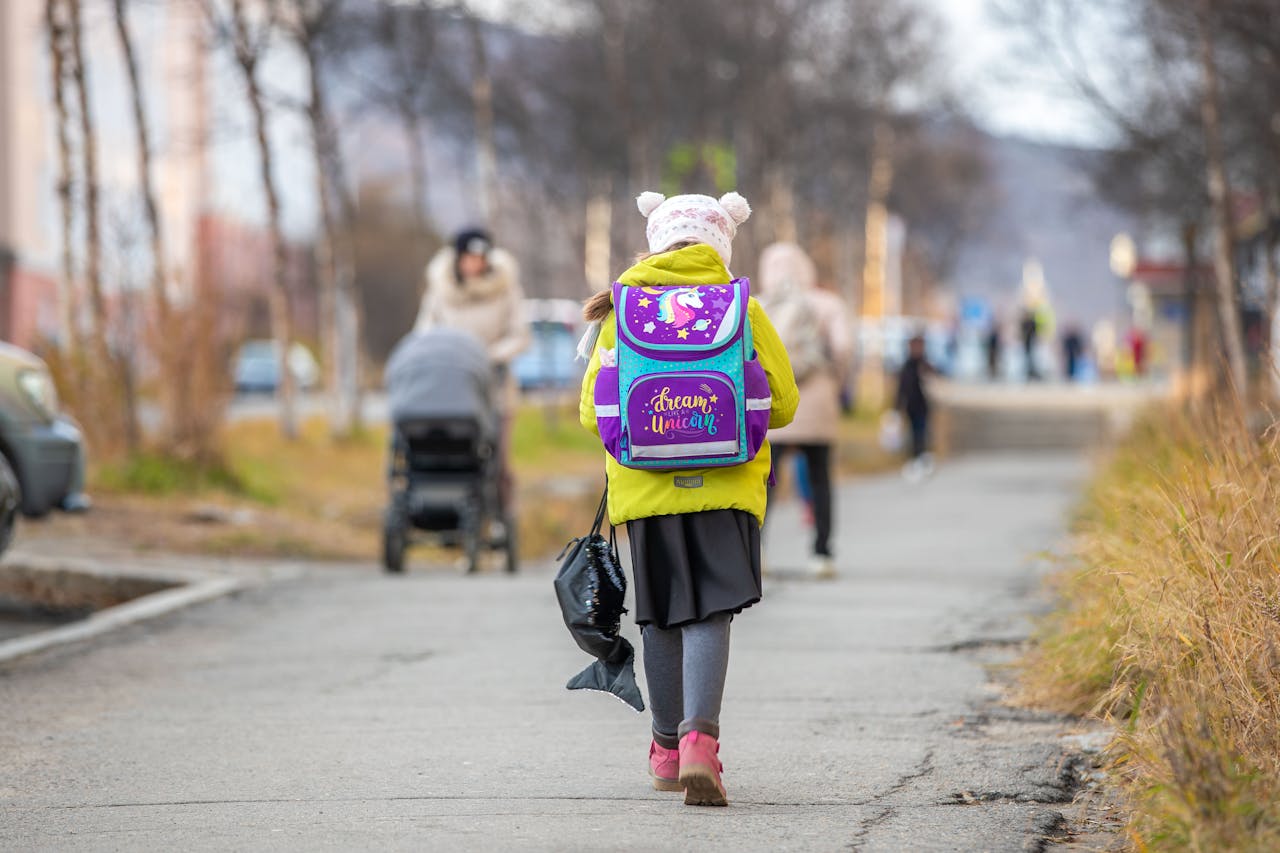
In this blog post, I will describe my own tips for backpacks and kids. Backpacks are a great way to carry books, homework and lunch, but they do have some potential hazards.
One simple way to assess whether your child’s backpack is too heavy is to follow this general guideline: the total weight of your child’s backpack should not exceed ten percent (10%) to fifteen percent (15%) of his/her total body weight. For instance, if your child weighs sixty (60) pounds he/she should never have more than six (6) to nine (9) pounds in his/her backpack. Any load greater than that could create an excessive burden on the muscles in the lower back, upper back, and neck.
In addition to weight, you can know if your child’s backpack is too heavy if:
Your child has difficulty lifting the backpack onto their shoulders.
Your child bends over while attempting to walk or run with their backpack on.
Your child expresses complaints of pain or discomfort.
If your child carries a backpack that is too heavy, there are several physical consequences that can occur. The most common symptoms include back and/or neck pain. Long-term repetitive trauma from wearing a heavily-loaded backpack can result in more severe long-term effects such as: poor posture, scoliosis (rounded shoulders), chronic back pain, or even nerve compression and damage. Improperly carrying a heavy backpack – such as having it hang from just one shoulder – can compound existing conditions and potentially lead to further complications.
To minimize the potential negative effects of wearing a backpack, follow these tips:
Pack only what is needed and remove anything that isn’t needed that day.
Make sure the shoulder straps are adjusted properly. Wear the backpack properly.