
I do not personally like being cold. But I have had some fantastic winter vacations – winter family trips can be so much fun! Maybe you are planning a ski trip, visiting relatives for Christmas, or traveling internationally in the winter. In any case, if you are planning a vacation to a cold weather destination, then packing the best cold weather clothing for your kids is really important. You want them to stay warm and comfortable, but you don’t want to overpack.
Here 10 tips for staying warm in cold weather:
1. Dress children in layers. Clothes can cause sweating. If your child gets wet from sweat, they can get cold. Choose clothes with good insulation in mind. The goal is to keep cold air out, and keep the body heat in. Also, wearing layers helps with insulation. With good gear and with layers, the skin should stay warm even when it is cold outside. If you are planning outdoor activities that result in sweating, the clothes touching the skin can get wet.
2. Wet clothing feels cold. It doesn’t matter if the clothes are wet due to snow, rain, or sweat. Wet clothing feels cold and causes the body to lose body heat. Being wet can cause serious problems even if the temperature is above freezing. To stay dry, wear a waterproof outer layer, and an inner layer that is good at wicking (keep reading to learn about both!).
3. Little kids get cold especially easily. Young children have less body fat than adults, so they have less insulation, meaning that they get cold more quickly. Very young children can feel cold but might not be able to verbalize that they are cold.
7. Bulky winter coats should NOT be worn in car seats. With bulky winter coats, the straps of the car seat do not fit tightly, and might not securely hold the child in an accident. With car seats, follow the manufacturer instructions, but often it is best to remove the coat in the car. Adjust the heat level in the car to be comfortable without a jacket. A blanket can be put on top of the fastened straps, over the legs and lower abdomen if needed.
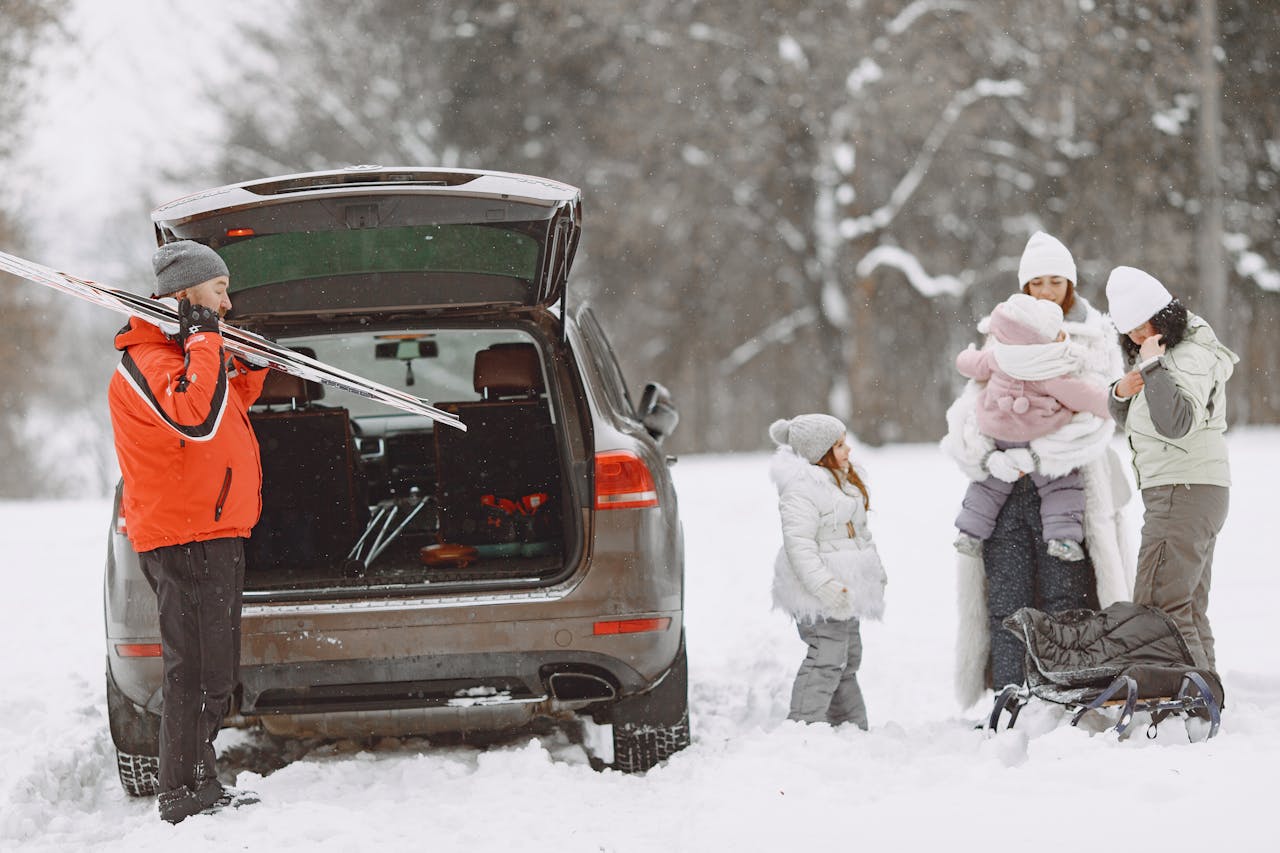
6. The outer layer is to keep out rain and wind. Wear a waterproof outer layer that also helps block the wind. Activities like skiing and snowboarding amplify the wind’s effects. When skiing, having an outer with flaps or zippers can be nice because opening and closing them to regulate temperature is easier than adding or removing layers. For the outer layer, bright colors help make kids more visible.
5. The middle layer is for insulation. Several loose-fitting, thin layers are better than one thick one. This is because air gets trapped between the layers, providing insulation for body heat. Also, you can add or remove layers if the child gets too hot or is still cold. Wool is great because it keeps people warm even if it gets wet – most other fabrics feel cold when wet. Other good insulating materials include fleece, down and some synthetic materials. Cotton is not as effective because it feels cold when wet.
4. The inner layer is for wicking. Each layer has a purpose. The inner layer should move moisture away from the skin – this is called “wicking”. Polyester fabric is a material that is good at wicking. This keeps the skin dry and comfortable if your child sweats. When dressing infants in layers, also consider what the process of diaper changes will be like – try to select clothes that are relatively easy to take off and put back on.
8. Wear a hat. Hoods provide some warmth, but not as much as a hat. A hat will keep your child’s heat and ears warm. The big advantage of hoods is that your child won’t lose it, but don’t use hoods with long drawstrings; long strings can cause injuries by getting caught in branches and climbing structures. Hats are warmer and safer than hoods.
9. Neck warmth. Long scarves can cause injuries if they get caught in things. A neck warmer or scarf wrapped over the nose and mouth will help to warm the air that your child breathes in, which can reduce the chance of getting a cough.
10. Mittens are warmer than gloves. Mittens fit loosely, which allows air to move around the fingers, and the skin warms that air. In really cold weather, waterproof mittens worn on top of gloves add extra insulation. Both mittens and gloves should be long enough to not leave skin exposed between the mitten and the coat. For small children, choose gloves/mittens that attach to the sleeves by clips so they don’t get lost.